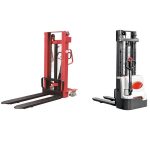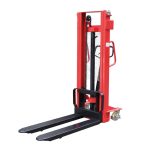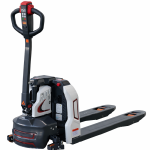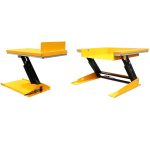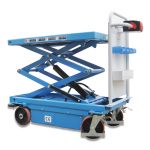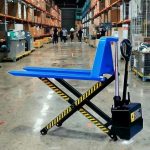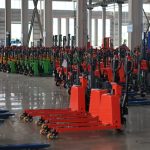



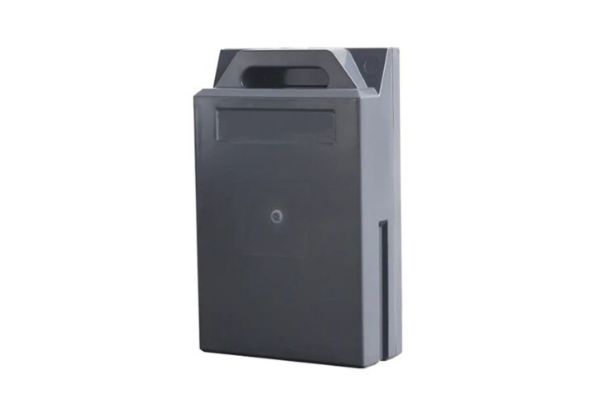
With the continuous expansion of global trade, electric material handling equipment—such as electric pallet trucks, stackers, and forklifts—has become an important product category in international logistics and warehouse operations. These machines are widely exported by sea, especially to Europe, Southeast Asia, the Middle East, and South America.
Because batteries are key components of this equipment, their transportation compliance plays a vital role in export success. For foreign trade sales professionals, understanding battery certification requirements for sea freight is essential for smooth delivery and customer satisfaction.
This article focuses on battery certification for sea transportation only, with special emphasis on CNAS-certified hazard classification reports, which are widely accepted in maritime logistics.
1. Why Battery Compliance Is Important in Sea Freight
Although sea freight is generally more stable and cost-effective than air transport, batteries are still considered sensitive cargo. Shipping lines, ports, and freight forwarders carefully review battery-related documents to prevent safety risks.
Without proper certification, exporters may face:
- Cargo rejection by shipping companies
- Delayed vessel booking
- Additional inspection fees
- Port storage charges
- Missed delivery schedules
Therefore, battery compliance is not only a regulatory requirement but also a business necessity.
2. CNAS-Certified Hazard Classification Report
For sea freight export, the most important battery-related document is the Hazard Classification and Identification Report for Transport of Goods, issued by a laboratory accredited by CNAS (China National Accreditation Service for Conformity Assessment).
2.1 What Is a CNAS-Certified Report?
A CNAS-certified report means that:
- The testing laboratory meets international technical standards
- The test procedures are recognized by shipping companies
- The results are reliable and traceable
Reports issued by CNAS-accredited laboratories are widely accepted by major carriers, ports, and freight forwarders.
2.2 “Non-Restricted Cargo” Classification
In most cases involving lead-acid batteries or specially tested storage batteries, the report will indicate:
“Non-Restricted Goods”
This classification confirms that the product:
- Is not classified as dangerous goods for sea transport
- Can be shipped as general cargo
- Does not require dangerous goods declaration
- Does not need special hazardous packaging
For exporters, this status significantly reduces transportation costs and operational complexity.
3. Role of the Hazard Classification Report in Shipping Operations
The hazard classification report plays a central role in maritime logistics.
3.1 Vessel Booking
Before accepting battery-related cargo, shipping lines usually request:
- Hazard classification report
- Product description
- Packing information
Without this report, vessel space may be refused.
3.2 Customs and Port Inspections
During export clearance and port handling, authorities may verify:
- Cargo classification
- Safety compliance
- Documentation consistency
A CNAS-certified report helps pass inspections smoothly.
3.3 Freight Forwarder Coordination
Professional freight forwarders rely on this document to:
- Choose appropriate shipping channels
- Prepare cargo declarations
- Avoid misclassification risks
For sales professionals, providing this document early helps accelerate logistics arrangements.
4. Battery Types and Sea Freight Compliance
Different battery types have different regulatory characteristics.
4.1 Lead-Acid Batteries
Lead-acid batteries are commonly used in industrial equipment and are relatively stable.
Advantages for sea freight:
- Mature safety standards
- Easier hazard classification
- High acceptance by carriers
With a CNAS-certified report confirming “Non-Restricted Goods,” these batteries are usually transported as normal cargo.
4.2 Special Storage Batteries
Some modern storage batteries, including customized industrial batteries, may also qualify as non-restricted cargo after testing.
However, professional evaluation is still required to confirm compliance.
Early testing is recommended to avoid delays.
5. Market Access vs. Transportation Compliance
It is important to understand that transportation compliance and market access certification are different concepts.
5.1 Transportation Compliance (Sea Freight)
For maritime transportation, the main focus is:
- CNAS-certified hazard classification report
- Proper packaging
- Clear labeling
These documents ensure safe shipping.
5.2 Market Access Certification
Depending on the destination market, additional certifications may be required, such as:
- CE marking (European Union)
- RoHS and REACH compliance
- Local electrical safety standards
These certifications affect product sales, not transportation.
Sales professionals should prepare both sets of documents in parallel.
6. Practical Working Procedure for Sales Teams
To improve efficiency and avoid mistakes, sales teams should follow a standardized workflow.
Step 1: Confirm Transportation Mode
Ensure that the shipment is arranged by sea freight only.
This determines the certification strategy.
Step 2: Verify Battery Type
Clarify whether the equipment uses:
- Lead-acid batteries
- Industrial storage batteries
This affects testing requirements.
Step 3: Obtain CNAS-Certified Report
Arrange testing with a CNAS-accredited laboratory and ensure the report clearly states:
- Product name
- Battery specifications
- “Non-Restricted Goods” conclusion
Step 4: Prepare Supporting Documents
Collect:
- Commercial invoice
- Packing list
- Product specifications
- Hazard classification report
Step 5: Communicate with Logistics Partners
Provide documents in advance to:
- Freight forwarders
- Shipping companies
- Port agents
This prevents last-minute issues.
7. Sales Advantages of Strong Compliance Knowledge
Professional understanding of sea freight certification creates real business value.
7.1 Faster Order Processing
Clear documentation allows:
- Quicker booking confirmation
- Faster customs clearance
- Reduced waiting time
7.2 Improved Customer Confidence
Customers prefer suppliers who can explain:
- Why CNAS certification is important
- How shipping risks are controlled
- How delivery schedules are protected
This strengthens long-term cooperation.
7.3 Lower Operational Risk
Accurate classification reduces:
- Cargo detention
- Re-packaging costs
- Insurance disputes
Compliance directly protects profit margins.
8. Common Mistakes to Avoid
Sales professionals should be aware of frequent errors:
- Submitting expired reports
- Using reports from non-accredited labs
- Mismatching product models
- Delayed document submission
Any of these issues may cause shipment suspension.
Regular internal audits are recommended.
9. Conclusion
For companies exporting electric material handling equipment by sea, battery compliance is centered on one key document: the CNAS-certified Hazard Classification and Identification Report.
This report determines whether batteries can be transported as general cargo and directly influences logistics efficiency and cost.
Key points for sales professionals:
- Sea freight focuses on CNAS-certified hazard classification
- “Non-Restricted Goods” status is highly valuable
- Early testing prevents shipment delays
- Transportation compliance and market access are separate
- Professional knowledge enhances competitiveness
In modern international trade, smooth logistics is a major competitive advantage. By mastering sea freight battery certification requirements, sales teams can provide reliable service, minimize risks, and support sustainable business growth.
Compliance is not just a requirement—it is a foundation for long-term success.
Related Products
 HS Manual Stacker vs QES Electric Stacker: Which Pallet Stacker Is Right for Your Warehouse?
- Manual Stacker vs. Manual Straddle Stacker: When to Choose Which?
- Lead-Acid vs. Lithium Battery Pallet Trucks: Which Is the Better Choice for Your Business?
- ALT Series Buying Guide: Key Parameters to Confirm Before Purchasing a Lift and Tilt Table
- How to chose the suitable lift table?
- Is There a Lifting Solution That Requires No Power? Meet the i-Lift QAL1000 Quick Airbag Loader!
- The 2025 Ultimate Guide to Electric Pallet Jacks
- iLiftEquip High-Reach Pallet Trucks: Powering the Efficiency Revolution in European Logistics
- High Lift Pallet Jack Showdown: Why i-lift Equipment Outshines the Competition
- How to Choose the Right Electric Pallet Truck for Your Warehouse