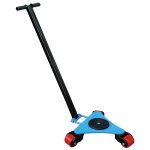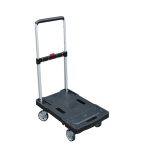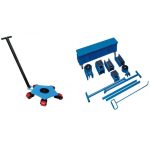



Moving a heavy cabinet, office desk, commercial appliance, or piece of equipment is rarely a simple task. Even when the load only needs to travel a short distance, its weight, size, and shape can make manual handling difficult.
Traditional moving methods often require several workers, repeated lifting, and considerable preparation. In workplaces where furniture or equipment must be repositioned regularly, this can increase labour requirements, interrupt normal operations, and create unnecessary handling risks.
A heavy-duty furniture mover provides a more practical solution. By combining a lifting mechanism with mobile support, it helps operators raise and transport bulky items without relying entirely on manual lifting.
This article explains how a professional furniture mover can improve handling efficiency, where it can be used, and what businesses should consider when choosing equipment for moving heavy furniture, appliances, and machinery.
Why Heavy and Bulky Loads Are Difficult to Move
The difficulty of moving an object is not determined by weight alone.
A compact machine may be extremely heavy but relatively easy to support. In contrast, a large cabinet or desk may weigh less but be more difficult to grip, balance, and guide through a narrow area.
Common handling challenges include:
- Uneven weight distribution
- Limited handholds
- Wide or irregular dimensions
- A high centre of gravity
- Narrow corridors and doorways
- Finished floors that require protection
- Limited access for forklifts or cranes
- Frequent changes to workplace layouts
These challenges are common in offices, hotels, warehouses, workshops, retail stores, maintenance departments, and manufacturing facilities.
When workers move these items manually, they may need to lift one side, insert a support underneath, reposition their hands, and repeat the process several times. A suitable furniture mover can simplify this workflow by lifting and supporting the load mechanically.
What Is a Heavy-Duty Furniture Mover?
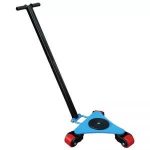
A heavy-duty furniture mover is a compact material-handling device designed to lift and transport large objects across suitable floor surfaces.
Unlike a basic platform dolly, a furniture mover with an integrated lifting mechanism can raise an item from floor level before it is moved. This reduces the need to lift the entire load manually onto a separate trolley.
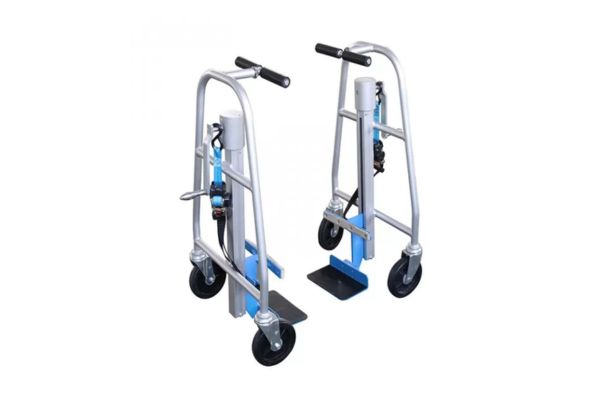
A professional furniture mover generally includes:
- A load-supporting plate
- A mechanical lifting system
- A durable frame
- Mobile wheels or castors
- A handle or steering structure
- A compact or foldable design
This type of equipment is especially useful when a load is too large for a conventional hand truck, but the working area does not provide enough space for a forklift.
How One-Operator Handling Improves Efficiency
One of the main advantages of a compact furniture mover is that it can reduce the number of people required for certain moving tasks.
This does not mean that every load should automatically be moved by one person. The size, shape, stability, route, and working environment must still be evaluated. A spotter or additional operator may be required for tall, wide, fragile, or poorly balanced items.
Where the load and environment are suitable, one-operator handling can improve efficiency in several ways.
Less Dependence on Manual Lifting
The lifting mechanism raises the item so that it can be supported and rolled. This reduces the amount of direct physical lifting required from workers.
Fewer People Required for Routine Moves
Businesses may not need to assemble a large team every time a cabinet, desk, appliance, or piece of equipment needs to be repositioned.
Faster Workplace Reconfiguration
Furniture and equipment can be moved with less disruption when offices, guest rooms, production areas, or storage spaces are reorganised.
More Flexible Scheduling
Routine moves do not always need to wait until several workers are available. Trained personnel can respond more quickly when the task is suitable for the furniture mover.
Better Use of Larger Equipment
Forklifts, cranes, and other powered equipment can remain available for tasks that genuinely require their capacity, height, or reach.
Typical Applications for a Furniture Mover
A heavy-duty furniture mover can support a wide range of commercial and industrial applications.
Office Relocation and Space Reconfiguration
Office layouts change for many reasons. Businesses may add workstations, create meeting areas, replace storage systems, or relocate departments.
A furniture mover may be used for items such as:
- Large desks
- Filing cabinets
- Storage cupboards
- Conference tables
- Bookcases
- Equipment cabinets
- Office appliances
Compact moving equipment can be particularly useful in occupied buildings where noise, access, and interruption must be kept under control.
Hotel and Hospitality Maintenance
Hotels frequently move furniture during room renovations, maintenance work, deep cleaning, and layout updates.
Typical loads may include:
- Wardrobes
- Cabinets
- Bedside units
- Tables
- Small refrigerators
- Laundry equipment
- Decorative furniture
A compact furniture mover can help maintenance teams work in corridors, guest rooms, and service areas where larger machines cannot operate easily.
Appliance Delivery and Installation
Large appliances can be difficult to move because they are often tall, heavy, and sensitive to tilting.
Suitable applications may include:
- Refrigerators
- Freezers
- Washing machines
- Dryers
- Commercial kitchen appliances
- Vending equipment
Before moving an appliance, operators should disconnect electrical, water, or gas connections where applicable. Doors, cables, hoses, shelves, and loose accessories should also be secured.
Always follow the appliance manufacturer’s transportation instructions, especially when the appliance must remain upright.
Warehouse and Storage Operations
Warehouses do not only handle palletised goods. They may also need to move cabinets, packing equipment, workbenches, storage units, and maintenance machinery.
A furniture mover can be a practical option when:
- The load is not positioned on a pallet
- Forklift access is restricted
- The travel distance is relatively short
- The floor is level and suitable
- The item needs to be repositioned rather than transported over a long distance
Manufacturing and Workshop Applications
Manufacturing facilities often contain machines, assemblies, tool cabinets, and workstations that must be relocated during maintenance or process changes.
A compact equipment mover can complement forklifts, cranes, and machinery skates by handling suitable loads in confined areas.
Typical applications may include:
- Tool cabinets
- Light machinery
- Workbenches
- Production equipment
- Maintenance units
- Heavy assemblies
- Equipment stands
The correct moving method depends on the weight, dimensions, support points, centre of gravity, and floor conditions.
Retail and Display Installation
Retail stores regularly change displays, fixtures, counters, and product layouts.
A furniture mover may help store teams or installation contractors reposition:
- Display cabinets
- Counters
- Shelving units
- Storage furniture
- Refrigerated displays
- Promotional fixtures
Compact moving equipment can reduce the need to bring a forklift or large trolley into customer-facing areas.
Key Features of the Furniture Mover
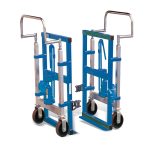
The Moving Equipment Dolly is designed for applications that require a combination of load capacity, lifting capability, portability, and compact storage.
Large Load Capacity
This makes it suitable for many heavy furniture, appliance, and equipment-handling tasks, provided that the load is stable, correctly positioned, and suitable for the lifting method.
Operators should know the approximate total weight of the item before moving it. Contents, accessories, internal components, and attached parts must be included when calculating the load.
320 mm Maximum Lifting Height
The furniture mover provides a maximum lifting height of 320 mm, approximately 12.6 inches.
This lifting range helps raise suitable loads from floor level and provides the clearance needed for movement.
The load should only be raised as high as necessary. Keeping the item as low as possible generally helps maintain stability.
Aluminium-Alloy Construction
The Heavy Equipment Moving Dolly uses an aluminium-alloy structure, providing strength while keeping the equipment relatively lightweight.
With a listed net weight of approximately 20 kg, the unit can be easier to transport between work areas or job sites than heavier steel equipment.
Mechanical Lifting Support
The lifting mechanism helps operators raise suitable furniture and equipment without relying entirely on physical lifting.
The mechanism should be inspected regularly. Equipment should be removed from service if damage, deformation, unusual movement, or excessive wear is found.
Foldable and Detachable Design
The Heavy Equipment Mover can be opened or folded through its shaft mechanism, allowing the unit to be prepared for use or reduced in size for storage and transportation.
This feature may be useful for:
- Service vehicles
- Maintenance departments
- Storage rooms
- Mobile installation teams
- Delivery operations
- Contractors working across multiple locations
Compact Overall Dimensions
The listed overall dimensions are approximately 510 × 440 × 845 mm.
Its compact design makes the Heavy Equipment Mover suitable for areas where access is limited and larger handling equipment may be difficult to use.
How to Use a Furniture Mover Efficiently
A furniture mover is most effective when the task is planned correctly.
1. Confirm the Load
Identify the weight, dimensions, centre of gravity, and suitable support points.
Do not use the furniture mover when:
- The load exceeds its rated capacity
- The item cannot be supported securely
- The lifting plate may damage a weak surface
- The load becomes unstable when raised
- The proposed handling method is not suitable for the item
2. Inspect the Moving Route
Check the entire route before lifting the item.
Look for:
- Floor damage
- Debris
- Cables
- Thresholds
- Slopes
- Tight corners
- Narrow doors
- Low overhead clearance
- People working nearby
The floor should be firm, level, clean, and suitable for the mover’s wheels.
3. Empty and Secure the Item
Remove unnecessary contents to reduce the total weight and prevent movement inside the load.
Secure any:
- Drawers
- Cabinet doors
- Appliance doors
- Shelves
- Cables
- Hoses
- Removable panels
- Loose accessories
Use suitable protective materials when moving painted, polished, decorative, or fragile surfaces.
4. Position the Lifting Plate Correctly
Place the lifting plate against a strong and suitable part of the load.
Avoid lifting against:
- Glass
- Decorative trim
- Handles
- Control panels
- Doors
- Thin sheet metal
- Pipes
- Unsupported panels
Check that the load is centred and likely to remain stable during lifting.
5. Lift the Load Gradually
Raise the object slowly while monitoring its balance.
Keep hands and feet away from the lifting area. Never place any part of the body beneath a raised load.
Only create enough clearance for safe movement. Raising the load unnecessarily may reduce stability.
6. Conduct a Short Movement Test
Move the load a short distance and stop.
Check whether:
- The load remains centred
- The wheels move smoothly
- The item shifts or tilts
- The operator can control the direction
- The route remains clear
Lower and reposition the item when the setup does not feel stable.
7. Move at a Controlled Speed
Use slow, smooth movements and avoid sudden changes in direction.
A spotter should be used when visibility is limited or when the load is tall, wide, fragile, or difficult to manoeuvre.
8. Lower the Load Carefully
At the destination, confirm that the final position is ready and stable.
Lower the item gradually while keeping hands, feet, cables, and other objects away from the contact area.
Furniture Mover vs Forklift: Which Should You Use?
A furniture mover does not replace a forklift in every application. Each type of equipment has a different role.
Choose a furniture mover when:
- The load is within the mover’s rated capacity
- The travel distance is short
- The working area is confined
- Forklift access is limited
- The load is not palletised
- Compact storage and transportation are important
- The floor is level and suitable
Choose a forklift or other powered equipment when:
- The load exceeds the mover’s capacity
- The item must travel over a long distance
- The route includes significant slopes
- The load must be raised to a high level
- Palletised materials are handled repeatedly
- Powered travel is required
- The load cannot be supported safely by the furniture mover
In some facilities, the most efficient solution is to use both. A forklift may transport equipment between departments, while a compact furniture mover handles final positioning in restricted spaces.
How a Furniture Mover Can Reduce Operational Disruption
The value of handling equipment is not limited to moving speed.
A compact furniture mover can also help businesses reduce disruption during:
- Office renovations
- Hotel room upgrades
- Machinery maintenance
- Production-line changes
- Retail refits
- Warehouse reorganisations
- Equipment installation
Because it does not require the same operating space as a forklift or crane, work may be completed with less interference to surrounding activities.
When used correctly with suitable protective materials, it can also help reduce the risk of damaging finished floors and interior surfaces.
Important Safety Considerations
Although the Furniture Moving Dollies are designed to help one operator handle suitable loads, every moving task should be assessed individually.
Operators should:
- Follow the operating instructions
- Wear appropriate personal protective equipment
- Never exceed the rated capacity
- Keep the load centred
- Avoid unsuitable or uneven floors
- Keep people away from the moving path
- Use additional assistance when required
- Never work beneath a raised load
- Inspect the mover before each use
- Stop immediately if the load becomes unstable
A machine’s rated capacity alone does not determine whether a move is safe. The object’s dimensions, centre of gravity, condition, support points, and working environment must all be considered.
How to Choose the Right Furniture Mover
Before purchasing an equipment mover, consider the following questions:
- What is the maximum weight of the loads?
- How high must each load be raised?
- Are the loads stable and suitable for side lifting?
- What type of flooring is used?
- How narrow are the doorways and corridors?
- Will the mover be transported between locations?
- How frequently will it be used?
- Are spare parts and technical support available?
- Do operators require additional training?
- Would another type of handling equipment be more suitable?
Answering these questions helps ensure that the selected furniture mover matches the actual application rather than simply providing enough load capacity.
Conclusion
Moving heavy furniture and equipment does not always require a large team, forklift, or overhead crane.
For suitable loads and controlled indoor environments, a compact heavy-duty furniture mover can provide a practical combination of lifting assistance, mobility, and manoeuvrability.
The i-Lift Furniture Mover offers large capacity, a maximum lifting height of 320 mm, aluminium-alloy construction, and a foldable design. These features make it suitable for moving furniture, appliances, cabinets, equipment, and other bulky items in commercial and industrial environments.
By choosing suitable equipment, inspecting the route, positioning the load correctly, and following safe operating procedures, businesses can complete routine moving tasks with less manual effort and reduced operational disruption.
Need help selecting a furniture mover for your application?
Explore the i-Lift Furniture Mover or contact our material-handling team with your load weight, dimensions, working environment, and lifting requirements.
Related Products
 AR150 furniture corner mover
- Equipment Mover FM series
- How to Choose the Right Electric Pallet Truck for Your Warehouse
- ALT750 Tilter Table: The Smart Solution for Precision Material Handling
- iWCRP-2 Heavy-Duty Rotating Roller Machine Skates
- TPPT15 folding platform truck
- Revolutionize Material Handling: How i-lift’s Carousel Turntable Cuts Labor Fatigue by 50%
- What Can Electric Machine Roller Skates Be Used to Move?
- Rotating Roller Machine Skates vs. Complete Skate Kits: Which Machinery Moving Solution Is Right for You?
- How to Move a 10-Ton Heavy Load Safely: Choosing the Right Rotating Roller Machine Skates