


Moving a 10-ton heavy load is not a simple task. Whether you are relocating industrial machinery, large production equipment, or heavy infrastructure components, improper equipment selection can result in safety hazards, damaged assets, and costly downtime.
A common question many buyers ask is:
“I have a 10-ton load to move. What product should I choose?”
This article provides a clear and practical guide to selecting the right rotating roller machine skates for safely and efficiently moving a 10-ton load, based on real industrial applications and proven equipment principles.
Understanding the Challenge of Moving a 10-Ton Load
A 10-ton load (approximately 22,000 lbs) introduces several challenges:
- Extremely high point loads on moving equipment
- Increased risk of load imbalance
- Greater demand for directional control and stability
- Higher safety requirements for operators
This means that standard material handling tools are not sufficient. The solution must be robust, scalable, and designed for heavy-duty industrial environments.
Rotating roller machine skates are widely used for such applications because they allow heavy machinery to be moved smoothly while maintaining full control.
Key Principle: Load Capacity Is Shared, Not Singular
One of the biggest misconceptions buyers have is assuming they need a single 10-ton-rated skate. In practice, heavy loads are almost always moved using multiple machine skates.
How Load Capacity Works
When using rotating roller machine skates:
- The total load capacity equals the combined capacity of all skates used
- The load must be evenly distributed across all skates
- The center of gravity must be carefully managed
For example:
- 4 × 4-ton skates = 16 tons total capacity
- 5 × 3-ton skates = 15 tons total capacity
For a 10-ton load, it is strongly recommended to build in a safety margin of at least 20–30%, meaning your combined skate capacity should be 12–15 tons or more.
Recommended Product Configuration for a 10-Ton Load
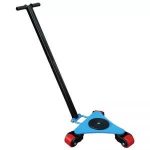
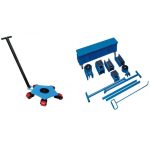
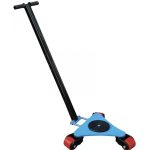
Instead of searching for one oversized product, the smarter approach is to use multiple heavy-duty rotating roller machine skates.
Option 1: Using 4-Ton Rotating Machine Skates
This is the most common and reliable solution.
Recommended setup:
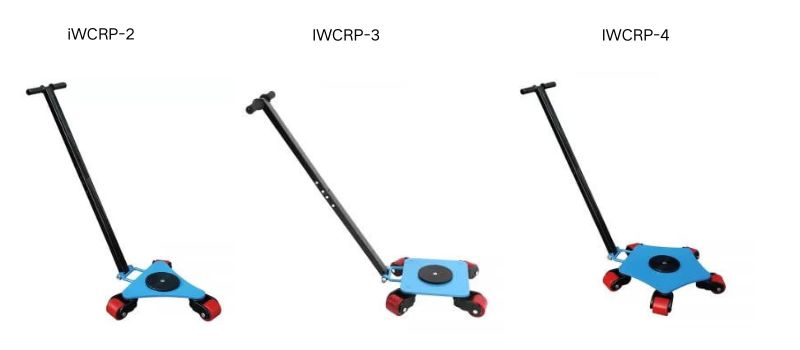
- 4 × 4-ton rotating roller machine skates
- Total capacity: 16 tons
- Suitable for large machinery with a wide footprint
Advantages:
- Excellent safety margin
- Improved stability
- Reduced stress on each individual skate
Option 2: Using 3-Ton Rotating Machine Skates
This option works when the load can be supported at more contact points.
Recommended setup:
- 5 × 3-ton skates
- Total capacity: 15 tons
Advantages:
- Flexible placement under irregular-shaped equipment
- Even load distribution when correctly positioned
Why Rotating Rollers Matter for Heavy Loads
For extremely heavy loads like 10 tons, maneuverability is just as important as load capacity.
Rotating roller machine skates with 360-degree rotation provide major advantages:
- Smooth directional changes without stopping
- Reduced need for manual repositioning
- Improved operator safety
- Higher efficiency in confined spaces
When moving heavy machinery inside warehouses or production facilities, this rotational capability significantly reduces risk and labor effort.
Material Strength: Why Heavy-Duty Steel Is Essential
When handling 10-ton loads, material quality is non-negotiable.
High-quality rotating machine skates are manufactured from heavy-duty steel, ensuring:
- Maximum structural strength
- Resistance to deformation under extreme pressure
- Long service life in demanding industrial conditions
Inferior materials may lead to:
- Roller failure
- Frame bending
- Sudden load instability
For critical moves involving expensive machinery, steel construction is essential for safety and reliability.
Floor Conditions: A Critical but Overlooked Factor
Even the best machine skates will fail if floor conditions are ignored.
Before moving a 10-ton load, assess:
- Floor load-bearing capacity
- Surface smoothness
- Presence of cracks, slopes, or uneven areas
Rotating roller machine skates perform best on smooth, reinforced concrete floors. If the floor is uneven, additional measures—such as steel plates—may be required to distribute pressure evenly.
Traction and Control: Completing the System
Machine skates alone do not move the load—you also need a controlled traction method.
Common options include:
- Chain hoists
- Manual winches
- Forklift-assisted towing
For a 10-ton load:
- The pulling force must be controlled and gradual
- Sudden movements should be avoided
- Operators must maintain clear visibility and communication
A properly coordinated traction system ensures smooth movement and prevents accidents.
Final Recommendation: The Smart Way to Move a 10-Ton Load
If you are asking, “I have a 10-ton load—what product should I choose?”, the answer is not a single oversized tool.
The safest and most efficient solution is:
- Multiple heavy-duty rotating roller machine skates
- Proper load distribution
- Adequate safety margin
- Correct towing method and floor preparation
By selecting the right combination of rotating machine skates and planning the move carefully, you can transport a 10-ton load with confidence, efficiency, and maximum safety.
Conclusion
Moving a 10-ton heavy load requires more than just strength—it requires the right strategy and the right equipment.
Rotating roller machine skates, when selected and used correctly, provide a proven solution for handling extreme weights in industrial environments. By understanding load distribution, choosing the correct models, and planning the entire moving process, you can ensure a safe and successful operation every time.
If safety, efficiency, and equipment protection matter to your operation, choosing the right rotating machine skates is an investment—not an expense.
Related Products
 What Can Electric Machine Roller Skates Be Used to Move?
- 5 Common Mistakes Buyers Make When Selecting Rotating Roller Machine Skates
- iWCRP-2 Heavy-Duty Rotating Roller Machine Skates
- Dust-Protected vs. Explosion-Proof Equipment: What Is the Difference?
- In-Depth Analysis of the i-lift HLC550 Hydraulic Crane
- HRL Rotating Lift Table vs. ERP2000 Stretch Wrap Machine: How to Choose the Right Solution for Your Pallet Handling Application
- Rotating Roller Machine Skates vs. Complete Skate Kits: Which Machinery Moving Solution Is Right for You?
- iWCRP-2 Heavy-Duty Rotating Roller Machine Skates: The Smart Choice for Moving Industrial Loads
- Safety Swing Gate vs Mezzanine Gate: What’s the Difference and Which One Should You Choose?
- A Complete Guide to Using Container Jacks: Tools, Process, Safety, and Applications