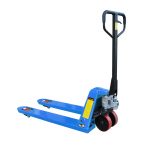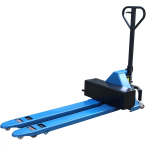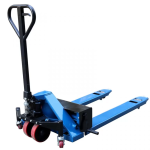



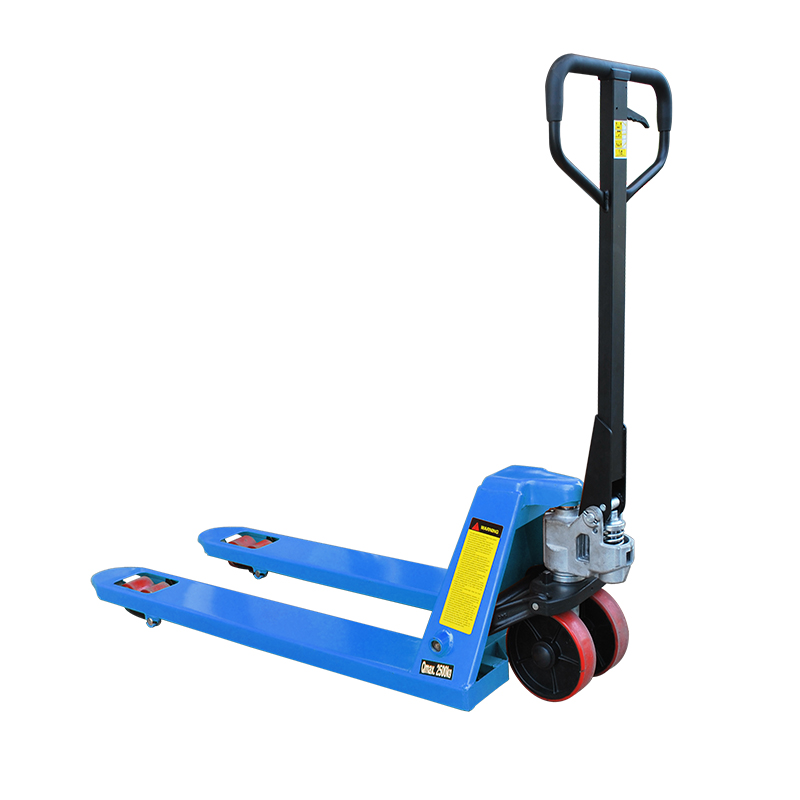
A hand hydraulic pallet truck, often referred to as a manual pallet jack, is one of the most essential tools in warehouses, factories, retail backrooms, and logistics centers. Despite its simple structure, choosing the right pallet truck requires careful consideration of several technical factors—especially fork dimensions, load capacity, and wheel materials.
Selecting the wrong pallet truck can lead to inefficiency, safety risks, and unnecessary maintenance costs. In this guide, we will walk through the key aspects you should consider when purchasing a hand hydraulic pallet truck, with a strong focus on fork size specifications, height range, wheel options, and rated capacity.
1. Understanding Fork Dimensions: Why Size Matters
Fork dimensions are among the most critical factors when choosing a hand hydraulic pallet truck. The correct fork size ensures compatibility with your pallets, improves handling efficiency, and reduces damage to both goods and equipment.
Fork Overall Width
Fork overall width refers to the total distance across both forks from the outer edge of one fork to the outer edge of the other.
This dimension must match the type of pallets you commonly use. Standard pallets, such as EUR or ISO pallets, require a compatible fork width to ensure smooth entry and stable lifting.
Key considerations:
- Narrow fork widths are ideal for tight spacesor non-standard pallets
- Wider forks provide better load stabilityfor large or heavy pallets
- Incorrect width may cause pallet damage or unstable loads
Before purchasing, measure the pallet openings and ensure the fork width allows smooth insertion without friction.
Fork Length
Fork length determines how deeply the pallet truck can enter the pallet and how well the load is supported.
Common applications include:
- Short forksfor maneuverability in confined spaces
- Standard-length forksfor most warehouse pallets
- Long forksfor oversized or double pallets
Why fork length is important:
- Forks that are too short may not fully support the load
- Forks that are too long can be difficult to maneuver in narrow aisles
- Proper fork length ensures balanced weight distribution
Choosing the correct fork length improves safety, reduces strain on the hydraulic system, and enhances operator efficiency.
Minimum Fork Height (Min. Fork Height)
Minimum fork height refers to the lowest position the forks can reach when fully lowered.
This is especially important if:
- You use low-profile pallets
- You operate in environments with uneven floors
- You handle pallets with limited ground clearance
A lower minimum fork height allows the pallet truck to slide easily under pallets without manual lifting or adjustments, improving productivity and reducing operator fatigue.
Maximum Fork Height (Max. Fork Height)
Maximum fork height indicates how high the pallet truck can lift a load.
While hand pallet trucks are not designed for stacking like forklifts, adequate lifting height is still essential for:
- Loading and unloading goods
- Crossing thresholds or dock plates
- Handling pallets on uneven surfaces
Ensure the maximum fork height is sufficient for your daily operations without exceeding the hydraulic system’s limits.
2. Wheel Selection: PU, Rubber, or Nylon?
The wheel material plays a crucial role in maneuverability, noise level, floor protection, and durability. Most hand hydraulic pallet trucks offer PU, rubber, or nylon wheels to suit different working environments.
PU (Polyurethane) Wheels
- Smooth and quiet operation
- Excellent floor protection
- Good load-bearing capacity
- Ideal for warehouses with epoxy or smooth concrete floors
Rubber Wheels
- High shock absorption
- Suitable for uneven or outdoor surfaces
- Quiet operation
- Slightly higher rolling resistance
Nylon Wheels
- Extremely durable
- Low rolling resistance
- Best for heavy loads
- Suitable for rough or oily environments, but noisier and harder on floors
Choosing the right wheel material improves handling performance and extends the service life of your pallet truck.
3. Rated Capacity: Matching Load Requirements
Rated capacity defines the maximum weight the hand hydraulic pallet truck can safely lift and transport.
Typical capacities range from 2000 kg to 3000 kg, depending on the model and design.
When evaluating rated capacity:
- Always account for the maximum load weight, not just average loads
- Avoid operating near the upper limit continuously
- Consider future needs as operations expand
Using a pallet truck beyond its rated capacity can lead to hydraulic failure, structural damage, and safety hazards.
4. Hydraulic System and Build Quality
Although not always listed as the first concern, the hydraulic pump quality directly affects lifting efficiency and durability.
Look for:
- Smooth and responsive lifting
- Leak-resistant hydraulic seals
- Reinforced steel construction
- Precision-welded forks
A high-quality hydraulic system reduces maintenance costs and ensures long-term reliability.
5. Ergonomics and Ease of Use
Operator comfort should not be overlooked. Features such as:
- Ergonomic handle design
- Smooth steering
- Easy-to-access control lever
These elements reduce fatigue and improve productivity, especially in high-frequency operations.
6. Application Environment
Before making a purchase, consider where the pallet truck will be used:
- Indoor or outdoor
- Narrow aisles or open spaces
- Smooth or uneven flooring
- Cold storage or standard environments
Matching the pallet truck specifications to your operating environment ensures optimal performance and safety.
Conclusion
Choosing the right hand hydraulic pallet truck involves much more than selecting a basic lifting tool. Critical factors such as fork overall width, fork length, minimum and maximum fork height, wheel material, and rated capacity all directly impact efficiency, safety, and durability.
By carefully evaluating your pallet types, load requirements, and working conditions, you can select a pallet truck that delivers long-term value and reliable performance.
For a wide range of high-quality hand hydraulic pallet trucks designed to meet different industrial needs, explore the solutions available at i-lift Equipment and find the right model to support your material handling operations.
Related Products
 Rough Terrain Pallet Truck vs Standard Hand Pallet Truck: Which One Do You Need?
- Manual Pallet Truck Buying Guide: Capacity, Fork Size, Wheels and Hydraulic System
- A Complete Guide to Using Container Jacks: Tools, Process, Safety, and Applications
- 2500kg vs 3000kg Manual Pallet Truck: A Practical Comparison
- Safety Swing Gate vs Mezzanine Gate: What’s the Difference and Which One Should You Choose?
- When Do You Need a U-Shape Low Profile Stationary Lift Table?
- Market Insights and Selection Guide for Hand Pallet Trucks, Small Capacity Hand Lifters
- AFPT1000E Adjustable Fork Pallet Truck: The Ultimate Solution for Modern Warehouse Efficiency
- Why the AFPT1000E Adjustable Fork Pallet Truck Is a Game-Changer for Your Warehouse
- Where Can a Pallet Turntable Be Used in Material Handling?