


Lifting a shipping container safely and efficiently is a common requirement in construction, logistics, container housing projects, and industrial maintenance. Because containers are extremely heavy and not designed to be lifted from the sides, using the right tools and procedures is critical. One of the most practical and widely adopted solutions is the container jack system, which combines a hydraulic jack with specially designed brackets.
This article provides a comprehensive guide to container jacks, including detailed explanations of the main tools, a step-by-step standard operating process, essential safety precautions, and a summary of common application scenarios. Whether you are a contractor, container modification professional, or DIY builder, this guide will help you understand how to use container jacks correctly and safely.
1. What Is a Container Jack System?
A container jack system is a lifting solution specifically designed to raise shipping containers from the ground in a controlled and stable manner. Unlike cranes or forklifts, container jacks are compact, cost-effective, and suitable for on-site operations where heavy machinery may not be available.
A typical container jack system consists of:
A Hydraulic Bottle Jack
A Container Jack Bracket
A Jack Handle
Each component plays a vital role in ensuring safe load transfer and controlled lifting.
2. Tool Explanation
2.1 Hydraulic Bottle Jack
The Hydraulic Bottle Jack is the core lifting component of the system. It uses hydraulic pressure to generate a large vertical lifting force with minimal manual effort.
Key characteristics:
High load capacity (commonly 5T, 10T, 12T, or 20T)
Compact vertical design
Stable lifting under vertical load
Simple hydraulic pump mechanism
When used in container lifting, the bottle jack must always remain in a vertical position to prevent side loading, which could cause failure or instability.
2.2 Container Jack Bracket
The Container Jack Bracket is a heavy-duty steel support specifically engineered to interface between the container and the jack.
Main functions:
Attaches securely to the container’s bottom rail or corner structure
Distributes lifting force evenly to prevent container deformation
Provides a stable and centered contact point for the jack head
Prevents slipping or misalignment during lifting
Without this bracket, placing a jack directly under a container is unsafe and may damage the container’s structure or cause the jack to slip out under load.
2.3 Jack Handle
The Jack Handle (also known as the pump handle) is the manual lever used to operate the hydraulic bottle jack.
Purpose:
Transfers human force into hydraulic pressure
Allows controlled, incremental lifting
Enables precise height adjustment
Proper use of the handle ensures smooth lifting and helps the operator monitor container movement throughout the process.
3. Standard Operating Procedure for Using a Container Jack
Using a container jack correctly requires following a clear and standardized lifting sequence. The four-step process below aligns with the visual instructions shown in the images and represents best practices widely used in container lifting applications.
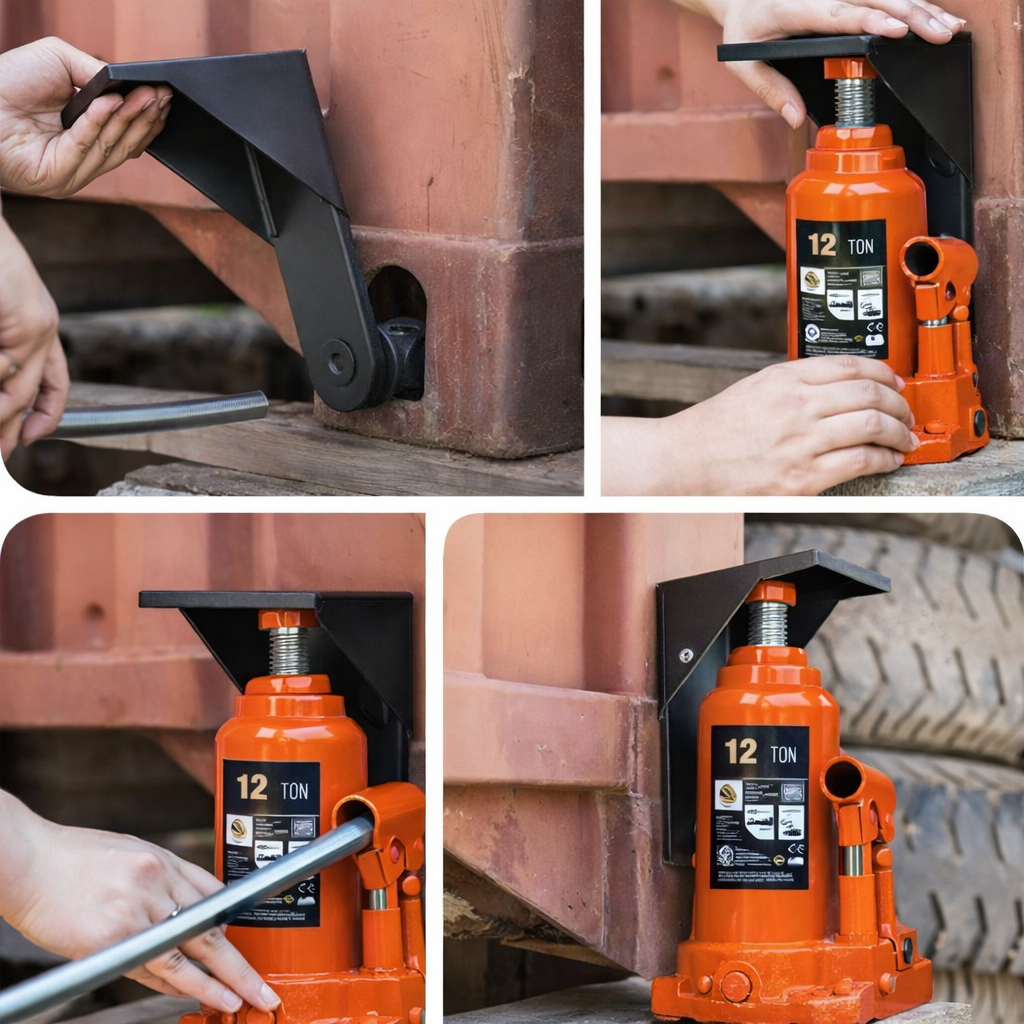
Step 1: Install the Bracket
Attach the container jack bracket securely under the container’s bottom rail or corner post, ensuring proper alignment.
Step 2: Position the Jack
Place the hydraulic bottle jack vertically beneath the bracket. Make sure the base is stable and supported on solid ground.
Step 3: Jack Up
Insert the handle and pump slowly to raise the container. Lift evenly and monitor stability during operation.
Step 4: Secure the Load
Once lifted, place permanent supports under the container. Do not rely on the jack for long-term support.
Important Reminder
For larger containers or leveling applications, this four-step process should be performed evenly at multiple corners using two or four jacks to maintain balance and structural safety.
4. Safety Considerations and Best Practices
Safety is the most critical aspect of container lifting. Containers weigh several tons, and improper lifting can result in serious injury or structural damage.
Key safety rules:
Never work under a container supported only by jacks
Always use load-rated brackets and jacks
Lift containers gradually and evenly
Avoid lifting one corner too high without supporting others
Use at least two or four jacks for larger containers when leveling
Inspect all tools before use for cracks, leaks, or deformation
Keep hands and feet clear of pinch points
After lifting, the container must be transferred to permanent supports as quickly as possible.
5. Common Application Scenarios
Container jack systems are widely used across multiple industries due to their flexibility and efficiency.
5.1 Container Housing and Modular Buildings
Container jacks allow builders to:
Level containers on uneven ground
Raise containers to install foundations
Adjust height during installation
5.2 Construction and Site Deployment
On remote or temporary construction sites, container jacks provide a practical alternative to cranes for minor adjustments and setup work.
5.3 Maintenance and Repair
Jacks are commonly used to:
Replace or adjust container footings
Repair damaged base sections
Improve drainage by increasing ground clearance
5.4 Logistics and Storage
Warehouses and yards use container jacks to reposition containers, add supports, or improve stability for long-term storage.
6. Why Choose a Container Jack System?
Compared to heavy lifting machinery, container jacks offer several advantages:
Lower cost
Portability
Easy operation
Minimal manpower requirements
High safety when used correctly
For many container-related tasks, a jack system is the most efficient and practical solution.
7. Conclusion
A container jack system is an essential tool for anyone working with shipping containers. By combining a Hydraulic Bottle Jack, a Container Jack Bracket, and a Jack Handle, users can safely lift and adjust containers with precision and control.
Understanding the tools, following the standard operating procedure, and respecting safety guidelines are the keys to successful container lifting. With proper use, container jacks provide a reliable, economical, and versatile solution for construction, modification, and maintenance projects.
If you plan to work with containers regularly, investing in a quality container jack system and using it correctly will save time, reduce risk, and improve overall efficiency.
Related Products
 What to Consider When Buying a Hand Hydraulic Pallet Truck
- How to Move a 10-Ton Heavy Load Safely: Choosing the Right Rotating Roller Machine Skates
- Why Hydraulic Toe Jacks Have Two Capacities (Toe vs Head)
- 2500kg vs 3000kg Manual Pallet Truck: A Practical Comparison
- Where Can a Pallet Turntable Be Used in Material Handling?
- Safety Swing Gate vs Mezzanine Gate: What’s the Difference and Which One Should You Choose?
- How to Select an Electric Lift Table for Fine Metal Dust Environments
- Manual Pallet Truck Buying Guide: Capacity, Fork Size, Wheels and Hydraulic System
- RLC354 industrial steel rolling ladders
- Dust-Protected vs. Explosion-Proof Equipment: What Is the Difference?