


Multi-level warehouses use mezzanines and pick modules to unlock vertical space. But every loading opening at height creates a serious hazard: an unprotected edge where people can fall and pallets can tip. A mezzanine gate (also called a pallet safety gate or mezzanine loading gate) turns that opening into a controlled transfer point—so you can move goods between floors without exposing workers to a drop.
What Is a Mezzanine Gate?
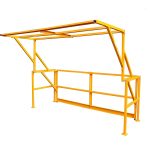
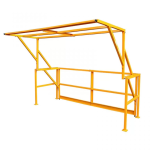
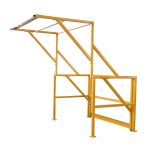
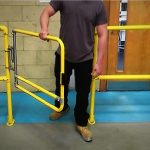
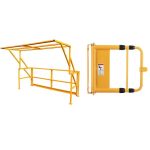
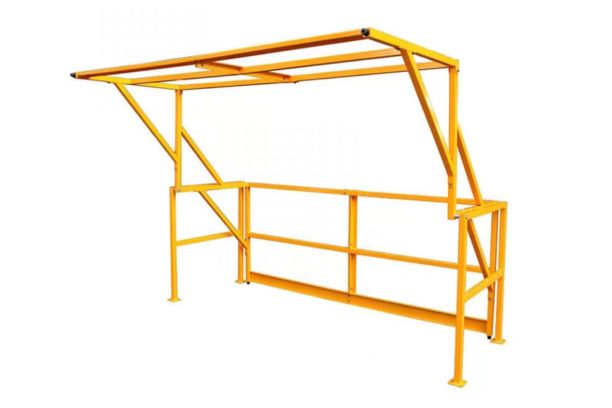
A mezzanine gate is an engineered barrier installed at mezzanine loading points. Most modern designs pivot or rotate so one side remains closed at all times: when the forklift side is open, the mezzanine side is protected; when the mezzanine side is open, the outer edge is protected.
1) It Eliminates the Most Common Mezzanine Hazard: Open-Edge Exposure
Competitor safety guides repeatedly point to the same root cause: loading and unloading at height is risky when the edge is temporarily open. Chains and removable rails are easy to skip when the shift is busy. A purpose-built gate provides consistent edge protection every cycle, helping prevent falls and keeping workers away from the drop while pallets are being staged.
2) It Enforces a Safer Pallet-Transfer Sequence by Design
A pivoting mezzanine safety gate creates a repeatable workflow. Forklift delivers a pallet into the bay; the gate rotates; the mezzanine team accesses the load. Because the mechanism blocks the exposed side during each step, it reduces reliance on “perfect behavior” and makes safe practice the default.
3) It Reduces Product Loss, Damage, and Disruption
A dropped pallet can destroy inventory, damage racking, and halt operations for cleanup and investigation. By defining a stable transfer bay and adding physical containment at the edge, mezzanine gates help prevent loads from being nudged or tipped over—protecting goods as well as people.
4) It Supports Higher Throughput in Peak Operations
When volume spikes, warehouses need a fast, clear routine that new and temporary staff can follow. Mezzanine loading gates simplify training: operators rotate the gate, place the pallet, and proceed. That consistency helps you move faster while staying aligned with safety expectations for work at height.
How to Choose the Right Mezzanine Gate
When comparing mezzanine gates, focus on these practical criteria:
- Always-protected edge: choose designs that keep one side closed at all times.
- Fit to your load: verify usable width/depth/height for your pallet type and handling method.
- Easy operation: balanced movement encourages correct use on every cycle.
- Guard details: handrail + mid-rail + kick plate/toe board improve protection and contain small items.
- Build quality & support: welded steel construction, clear assembly steps, and solid warranty/service.
Product Spotlight: i-Lift MG1000 Mezzanine Gate
For a durable, manual pivot gate for mezzanine pallet transfer points, i-Lift’s MG series is designed for busy warehouse loading areas. The MG1000 model emphasizes straightforward operation and robust guarding.
Highlights from the MG1000 product details:
- Manual swing-action gate; gates swing up and down to form a controlled transfer bay.
- Balanced swing operation without springs for smooth, predictable handling.
- Heavy-duty welded steel construction.
- Integrated guarding: 42 in handrail, 21 in mid-rail, and 4 in kick plate.
- Detachable, compact design to help save space.
Common sizing options (MG series):
- Models: MG1000 / MG2000 / MG2800
- Inside width (W): 1632 mm (64.3 in) / 2000 mm (78.7 in) / 2800 mm (110 in)
- Overall depth (D): 1915 mm (73.4 in); overall height (H): 2032 mm (80 in)
- Ships unassembled
See the full specification and request a quote here: https://www.iliftequip.com/mezzanine-gate-mg1000.html
Implementation Tips for Multi-Level Warehouses
- Standardize the transfer SOP (who rotates the gate, pallet placement, and pedestrian access rules).
- Use clear floor markings and signage to reinforce the loading zone and traffic direction.
- Inspect hinges/pivots, rails, fasteners, and toe boards on a routine schedule.
- Combine the gate with guardrails, good lighting, and housekeeping around the opening.
Conclusion
Mezzanine gates are essential because they turn an exposed edge into a controlled, repeatable process for moving pallets between floors. That means fewer fall hazards, less product damage, and smoother throughput—especially in high-cycle areas. If your facility uses mezzanines, installing a properly sized safety gate at each loading point is one of the most direct upgrades you can make.
Related Products
 Enhancing Warehouse Safety and Efficiency: i-Lift Mezzanine Safety Gates as Your All-in-One Solution
- MG1000 Mezzanine Gate: Enhancing Safety and Efficiency in Warehouse Operations
- MG1000 Mezzanine Safety Gate 1632mm 2000mm 2800mm
- How to Choose a Vertical Drum Lifter? Full Analysis & Core Advantages of i-lift
- Enhance Workplace Safety with i-lift’s Spring-Loaded Safety Swing Gate
- Safety Swing Gate vs Mezzanine Gate: What’s the Difference and Which One Should You Choose?
- HLC550 Hydraulic Lifting Crane: Why It Outperforms Google’s Top-Ranked Workshop Cranes
- Manual High Lift Pallet Trucks: The Ultimate Solution for Efficient Warehouse Operations
- ALT750 Tilter Table: The Smart Solution for Precision Material Handling
- How High Can a Pallet Jack Lift? Exploring the Power of High Lift Pallet Trucks