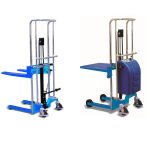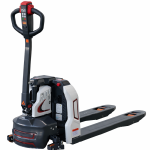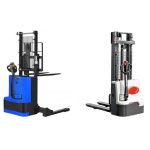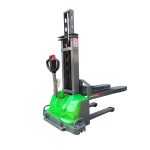



In modern warehouses and logistics facilities, pallet stackers play a critical role in improving material handling efficiency. Whether you operate a small warehouse, retail storage area, or a large distribution center, choosing the right stacker can significantly affect productivity, labor costs, and operational safety.
Among the many stacker options available, two common types are manual stackers and electric stackers. In this article, we compare two popular models from i-Lift:
HS Series Manual Stacker
QES Series Electric Stacker
By examining their features, performance, application scenarios, and cost-effectiveness, this guide will help you determine which stacker is the best choice for your business.
Overview of the HS Series Manual Stacker
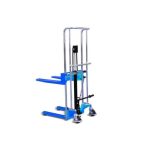
The HS Manual Stacker is a reliable and cost-effective material handling solution designed for lifting, stacking, and transporting pallets in light to medium-duty warehouse operations. Its simple hydraulic mechanism makes it easy to operate without relying on electricity or batteries.
The HS series offers multiple models with load capacities ranging from 500 kg to 1500 kg, making it suitable for a variety of pallet handling tasks.
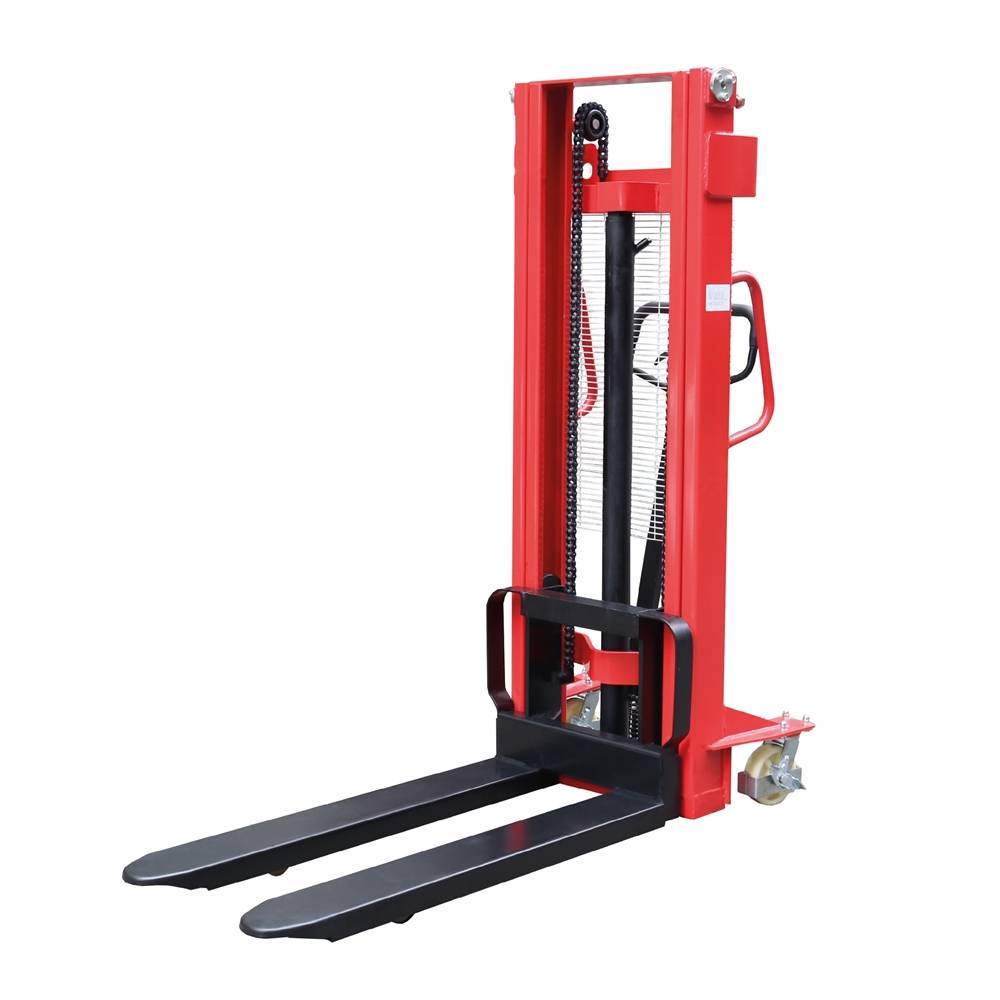
Key Features
Load capacity: 500 kg – 1500 kg
Maximum lift height: up to 3000 mm depending on the model
Manual hydraulic lifting system
Foot pedal lifting mechanism to reduce operator effort
Reinforced steel forks for improved durability
Adjustable fork option (320–870 mm) for different pallet sizes
Compact design for tight warehouse spaces
The stacker is constructed with a robust steel frame and reinforced forks, ensuring durability during daily use. The foot pedal allows operators to lift loads with less physical effort compared to traditional manual lifting systems.
Advantages of Manual Stackers
Manual stackers remain popular in many industries because of their simplicity and low operating costs.
1. Lower initial investment
Manual stackers are significantly more affordable than electric models. For small warehouses or businesses with limited budgets, this can be a major advantage.
2. Minimal maintenance
Since the HS stacker operates without motors, batteries, or electronic components, maintenance requirements are relatively low.
3. Reliable and durable
The simple hydraulic mechanism and reinforced steel construction ensure long service life even in demanding environments.
Limitations
However, manual stackers require physical effort for lifting and movement, which can reduce productivity when handling heavy loads frequently.
Overview of the QES Series Electric Stacker
The QES Electric Stacker represents a more advanced solution designed for higher efficiency and reduced operator fatigue. Unlike manual stackers, the QES series uses an electric drive and lifting system powered by a battery.
This stacker typically offers load capacities of 1000 kg to 1500 kg and lift heights ranging from 1600 mm to 3500 mm, making it suitable for more demanding warehouse operations.
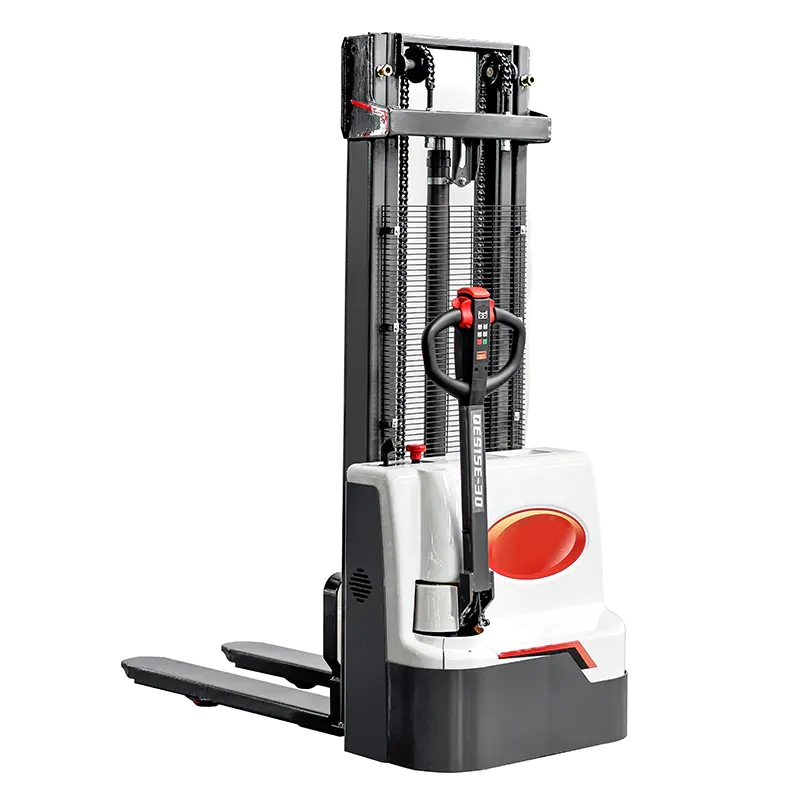
Key Features
Load capacity: 1000 kg – 1500 kg
Lift height: 1600 mm – 3500 mm
Electric lifting and drive system
Long ergonomic tiller handle
Compact chassis with small turning radius
Emergency stop button for safety
Optional lithium battery or lead-acid battery
Advanced control system with diagnostics
The long-tiller design improves ergonomics by allowing operators to control the machine from a safer distance while requiring less force during operation.
Additionally, the compact structure and short turning radius make it suitable for narrow aisles and confined warehouse spaces.
Advantages of Electric Stackers
Electric stackers are becoming increasingly popular in modern logistics operations due to their efficiency and ease of use.
1. Higher productivity
Electric lifting and driving systems significantly reduce manual labor and allow operators to handle more pallets in less time.
2. Reduced operator fatigue
Because the machine performs most of the heavy lifting, workers can operate the stacker for longer periods without excessive physical strain.
3. Improved safety
Many electric stackers include safety features such as emergency stop buttons, braking systems, and electronic control systems.
Limitations
The main drawbacks of electric stackers are higher upfront costs and battery maintenance requirements. Businesses must also plan for charging infrastructure and battery replacement over time.
Key Differences Between HS Manual Stacker and QES Electric Stacker
The following comparison highlights the main differences between the two models.
| Feature | HS Manual Stacker | QES Electric Stacker |
|---|---|---|
| Operation | Fully manual | Fully electric |
| Load capacity | 500–1500 kg | 1000–1500 kg |
| Lift height | Up to 3000 mm | Up to 3500 mm |
| Power source | Manual hydraulic | Battery-powered motor |
| Operator effort | High | Low |
| Maintenance | Very low | Moderate |
| Purchase cost | Lower | Higher |
| Productivity | Moderate | High |
Cost-Effectiveness: Which Stacker Offers Better Value?
When choosing between a manual and electric stacker, buyers should evaluate both initial investment and long-term operational efficiency.
HS Manual Stacker: Best for Budget-Conscious Buyers
The HS manual stacker is ideal for businesses that:
Have limited budgets
Handle lighter loads or occasional stacking
Prefer simple, low-maintenance equipment
For small warehouses, workshops, and retail storage areas, the HS series offers excellent value thanks to its durability and affordability.
QES Electric Stacker: Best for High Productivity
The QES electric stacker is a better option for businesses that:
Handle pallets frequently throughout the day
Need higher lifting efficiency
Want to reduce labor costs and worker fatigue
Although the initial cost is higher, electric stackers can deliver better long-term value by increasing operational efficiency.
Application Scenarios
Different warehouse environments may benefit from different types of stackers.
HS Manual Stacker Applications
Small warehouses
Retail stockrooms
Workshops and manufacturing facilities
Occasional pallet stacking tasks
QES Electric Stacker Applications
Logistics and distribution centers
High-volume warehouses
Narrow aisle storage systems
Facilities requiring frequent pallet stacking
Final Thoughts
Both the HS Manual Stacker and the QES Electric Stacker are excellent material handling solutions designed for different operational needs.
The HS series stands out for its affordability, simplicity, and durability, making it a practical choice for small-scale operations or occasional pallet handling tasks.
On the other hand, the QES electric stacker provides greater efficiency, improved ergonomics, and higher productivity, making it ideal for warehouses with heavier workloads and frequent stacking requirements.
Ultimately, the best choice depends on your warehouse’s budget, workload, and operational goals. By carefully evaluating these factors, businesses can select the stacker that delivers the best balance of performance, efficiency, and cost-effectiveness.
Related Products
 2500kg vs 3000kg Manual Pallet Truck: A Practical Comparison
- Optimizing Warehouse Efficiency: A Data-Driven Guide to Manual vs. Electric Pallet Trucks
- Manual vs Semi-Electric 400kg Light Stacker: Which One Should You Choose?
- A Comprehensive Guide to iLift’s Full Range of Pallet Handling Equipment
- PJ4150 vs. EJ4150 Light Stacker: Manual or Electric for Your Operation?
- How to Choose the Right Electric Pallet Truck for Your Warehouse
- HH1216JW vs QES Electric Stacker: Which Electric Stacker Is Better for Your Warehouse?
- FEYG Full electric self-propelled Lifter
- How to Choose the Right Manual Stacker
- Manual Stacker vs. Manual Straddle Stacker: When to Choose Which?