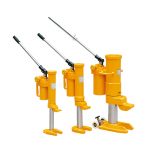



When browsing industrial lifting equipment, you may notice that a Hydraulic Toe Jack often lists two different lifting capacities: Toe Capacity and Head Capacity.
For example:
Toe Capacity: 8 tons
Head Capacity: 10 tons
This raises a common question among buyers and equipment operators:
Why does one jack have two different capacities?
In this article, we explain the difference between toe capacity and head capacity, why they are different, and how to use a toe jack safely.
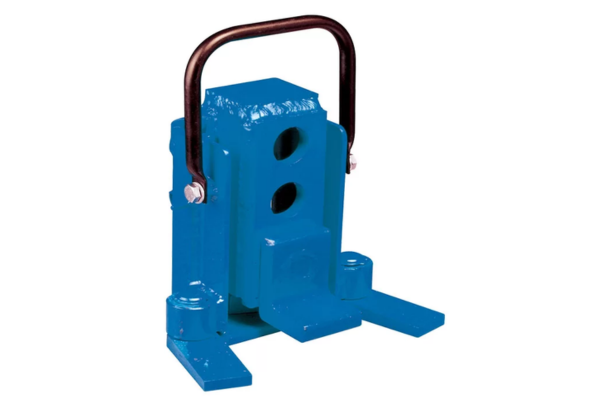
What Is a Hydraulic Toe Jack?
A Hydraulic Toe Jack (also called a Machinery Jack or Toe Jack Lifter) is a specialized hydraulic lifting tool designed for lifting heavy machinery from very low clearances.
Unlike standard bottle jacks, toe jacks have two lifting points:
Toe / Foot – the low-profile lifting claw
Head / Top – the traditional top lifting surface
The toe allows operators to slide the jack under machines with very small ground clearance, often as low as 20–30 mm.
Toe jacks are commonly used for:
Machinery installation
Factory relocation
Heavy equipment maintenance
Moving CNC machines, presses, or generators
Industrial rigging operations
Understanding Toe Capacity vs Head Capacity
Most toe jacks specify two load ratings.
Toe Capacity
The toe capacity refers to the maximum load the jack can lift using the low lifting claw (toe).
Example:
Toe Capacity = 8 tons
This means the machine can safely lift up to 8 tons when using the toe.
Head Capacity
The head capacity refers to the maximum load when lifting from the top saddle (head).
Example:
Head Capacity = 10 tons
This means the jack can lift up to 10 tons when using the top lifting surface.
Why Toe Capacity Is Lower Than Head Capacity
The reason comes down to mechanical structure and load distribution.
1. The Toe Is an Extended Lever
The toe is positioned away from the hydraulic cylinder centerline, creating a lever effect.
Because the load is applied farther from the main support structure:
Stress increases
Bending force increases
Structural limits are lower
As a result, manufacturers must reduce the rated capacity for the toe.
2. Structural Thickness Is Limited
The toe must remain very thin so it can slide under machines.
Typical toe thickness:
20–30 mm
Because the metal section is thinner, it cannot safely carry the same load as the central head.
3. Safety Factor Requirements
Industrial lifting tools are designed with safety margins.
Manufacturers calculate:
hydraulic pressure
structural strength
bending moments
To ensure safe operation, the toe rating is intentionally reduced compared to the head rating.
Typical Capacity Ratios
In most hydraulic toe jacks, the head capacity is about 1.2–1.5 times the toe capacity.
Examples:
| Model | Toe Capacity | Head Capacity |
| 3 Ton Toe Jack | 3T | 4T |
| 5 Ton Toe Jack | 5T | 7T |
| 8 Ton Toe Jack | 8T | 10T |
| 10 Ton Toe Jack | 10T | 15T |
| 15 Ton Toe Jack | 15T | 20T |
This is why an 8-ton toe jack often lists a 10-ton head capacity.
Why Toe Jack Models Are Named by Toe Capacity
In the industry, toe jack models are usually named based on the toe capacity, not the head capacity.
Example:
“8 Ton Hydraulic Toe Jack”
means:
Toe Capacity = 8T
Head Capacity ≈ 10T
This naming convention exists because the toe is the primary functional feature of the jack.
The head is simply an additional lifting option.
Common Buyer Misunderstandings
Many new buyers assume:
An 8-ton toe jack can lift 8 tons from the head
Or that both lifting points have the same rating
This is incorrect.
Always check the separate ratings for toe and head before lifting heavy machinery.
Safety Tips When Using a Toe Jack
To ensure safe operation:
✔ Always check toe capacity before lifting
✔ Lift from stable, solid ground
✔ Never exceed the rated load
✔ Lift machinery slowly and evenly
✔ Use machinery skates or rollers after lifting for moving equipment
Toe jacks are typically used only for initial lifting, not for long-term load support.
Conclusion
A Hydraulic Toe Jack has two different lifting capacities because it features two lifting points with different structural mechanics.
Toe Capacity – lower rating due to leverage and thin structure
Head Capacity – higher rating due to central load alignment
Understanding this difference helps buyers choose the correct equipment and operate lifting tools safely.
If you're selecting a toe jack for machinery moving or industrial lifting, always verify both capacity ratings before use.
Related Products
 Unlocking the Power of Hydraulic Toe Jacks: Features, Benefits and Industrial Applications
- Rough Terrain Pallet Truck vs Standard Hand Pallet Truck: Which One Do You Need?
- Boost Logistics Efficiency with i-lift SF Series Fixed Type Skates: A Comprehensive Guide
- 5 Common Mistakes Buyers Make When Selecting Rotating Roller Machine Skates
- 2500kg vs 3000kg Manual Pallet Truck: A Practical Comparison
- Foldable Lifter LPT250
- A Complete Guide to Using Container Jacks: Tools, Process, Safety, and Applications
- Does a Stationary Lift Table Need a Pit? Installation Methods Explained
- What to Consider When Buying a Hand Hydraulic Pallet Truck
- Trailer Trestle vs. Trailer Stabilizer Jack: How to Choose the Safest Support for Semi-Trailers & Container Loading