


In many material handling environments, efficiency depends on more than forklifts, pallet trucks, or lift tables. Small improvements at the workstation level can make a major difference in productivity, safety, and operator comfort. One of the most practical tools for this purpose is the pallet turntable, also known as a carousel turntable.
A pallet turntable is designed to rotate palletized materials with the assistance of an operator, making loading and unloading easier, faster, and safer. Instead of walking around a pallet repeatedly or reaching into awkward positions, workers can simply rotate the load to the most convenient working position. This reduces fatigue, improves workflow, and helps lower the risk of back injury.
So where can a pallet turntable be used in material handling? The answer is: in almost any operation where palletized goods need to be accessed from multiple sides.
What Is a Pallet Turntable?
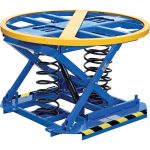
A pallet turntable is a low-profile rotating platform that allows a pallet or skid to turn 360 degrees. It is commonly used to support manual handling tasks such as loading, unloading, sorting, packing, and assembly.
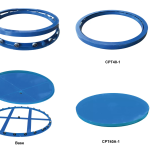
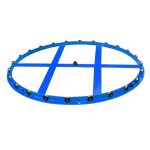
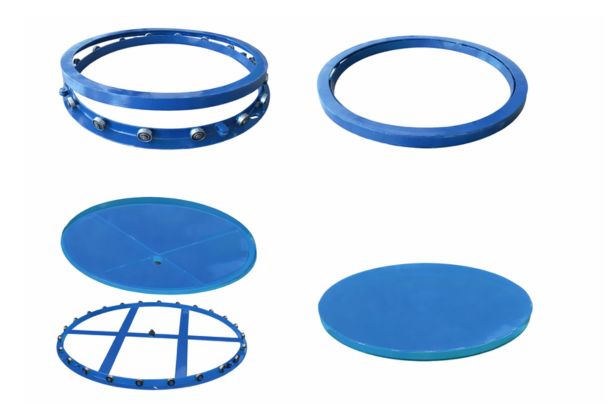
The carousel turntable described above is built from two pieces of rolled structural angle and uses a series of sealed bearings to transfer the load smoothly and evenly. Guide rollers keep the rings aligned, while the all-steel construction ensures long service life in industrial environments. It also includes an integral safety detent lock to restrict rotation when not in use.
Its low-profile height allows pallet trucks to access the turntable easily, even where floor space is limited and a pit installation is not practical.
Why Is a Pallet Turntable Useful?
Before looking at applications, it is important to understand why pallet turntables are valuable in material handling.
In many facilities, workers still load and unload pallets by walking around them, bending over, stretching, or twisting their bodies to reach products on different sides. These repeated movements slow down operations and increase physical strain.
A pallet turntable solves this problem by allowing the load to rotate instead of forcing the operator to move around the load. This provides several important benefits:
- Improves loading and unloading efficiency
- Reduces operator fatigue
- Lowers the risk of back and shoulder strain
- Makes single-operator handling easier
- Improves ergonomics at the workstation
- Helps maintain smoother workflow in limited spaces
Because of these advantages, pallet turntables are widely applicable across many industries.
1. Warehouses and Distribution Centers
One of the most common places to use a pallet turntable is in warehouses and distribution centers.
In these environments, workers often need to pick, place, sort, relabel, or reorganize goods on pallets. Without a turntable, they may need to walk around the pallet again and again to reach cartons on different sides. This wastes time and increases physical effort.
By placing a pallet turntable at the workstation, the operator can remain in one position and rotate the pallet as needed. This is especially useful for:
- Order picking
- Carton sorting
- Label application
- Repacking operations
- Transfer preparation before shipping
In busy warehouse operations, even a small reduction in motion can lead to meaningful productivity gains over time.
2. Packaging and Repacking Stations
Pallet turntables are also ideal for packaging stations where products are manually packed, unpacked, or repacked.
At these workstations, operators often need access to all sides of a pallet load. A turntable allows them to rotate the load smoothly and continue working without interruption. This creates a more organized and ergonomic packaging process.
Typical uses include:
- Opening inbound palletized cartons
- Repacking mixed goods
- Preparing goods for outbound shipment
- Wrapping or securing pallet loads
- Inspecting package condition before dispatch
Because the turntable can be added to an existing workbench, scissors table, or floor position, it is easy to integrate into different packaging layouts.
3. Manufacturing and Assembly Lines
In production environments, pallet turntables can improve workstation efficiency during assembly, sub-assembly, and part handling.
Operators working on palletized components often need repeated access to different sides of a load. Rotating the pallet is much easier than moving around it or repositioning heavy materials manually.
This makes pallet turntables a good choice for:
- Component feeding stations
- Assembly workstations
- Kitting operations
- Quality inspection points
- Temporary staging between processes
In these applications, the turntable supports a smoother flow of materials and helps reduce unnecessary handling.
4. Workstations with Scissor Lift Tables
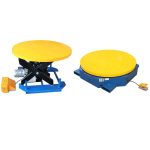
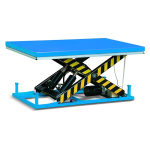
A major advantage of this type of carousel turntable is that it can be added to an existing scissor lift table.
This combination is particularly useful in ergonomic workstations. The lift table adjusts the working height, while the turntable adjusts the working position. Together, they help keep materials at a comfortable height and angle for the operator.
This setup is often used when:
- Products are loaded or unloaded manually
- The operator must work at different pallet levels
- Ergonomics is a high priority
- Repetitive handling tasks are performed throughout the day
For companies focused on improving operator safety and reducing fatigue, the combination of lift and rotation can be highly effective.
5. Floor-Level Loading and Unloading Areas
Not every facility wants to install fixed equipment or build pits into the floor. That is why low-profile pallet turntables are especially practical.
With an overall height of only 7/8 inch, this turntable allows pallet trucks to access the platform efficiently while saving floor space. It can be placed directly on the floor and does not need to be permanently mounted.
This makes it well suited for:
- Temporary work areas
- Flexible warehouse layouts
- Rental or leased facilities
- Operations that want simple installation
- Sites where floor modification is not possible
In these environments, a floor-level turntable provides the benefits of rotation without requiring major infrastructure changes.
6. Facilities with Limited Space
In many warehouses and production plants, space is always a concern. Wide circulation areas around each pallet are not always available, yet workers still need access to every side of the load.
A pallet turntable helps solve this issue by reducing the need for operators to move around the pallet. Instead, the pallet itself rotates within a compact footprint.
This is especially helpful in:
- Narrow work aisles
- Small packing zones
- Dense storage operations
- Compact assembly cells
- Busy shipping areas
For facilities looking to improve workflow without expanding floor space, a turntable can be a simple but effective solution.
7. Manual Material Handling Operations
Pallet turntables are particularly valuable in operations that still rely heavily on manual labor.
Not every company uses full automation, conveyors, or robotic pallet systems. In many real-world settings, operators still perform a large portion of handling tasks manually. A turntable is a cost-effective way to improve these jobs without redesigning the entire system.
It is especially useful where workers need to:
- Reach products on all sides of a pallet
- Remove or place cartons repeatedly
- Rotate skids or palletized loads manually
- Handle heavy or awkwardly positioned materials
In this sense, the pallet turntable is not a replacement for automation. Instead, it is a practical ergonomic aid that improves the efficiency and safety of manual operations.
8. Shipping, Receiving, and Cross-Docking Areas
Shipping and receiving zones are another strong application for pallet turntables.
In these areas, goods are constantly moving in and out, and pallets often need to be checked, sorted, adjusted, or repacked quickly. A turntable allows operators to perform these tasks faster by keeping the load accessible from every angle.
This is beneficial for:
- Inbound inspection
- Outbound preparation
- Load correction
- Mixed pallet handling
- Cross-docking transfers
When speed and flexibility matter, the ability to rotate a load easily can help reduce delays.
What Features Make It Suitable for These Applications?
The applications above are supported by the practical design features of the carousel turntable:
360° Rotation
The turntable allows full pallet or skid rotation by a single operator, making it easier to access all sides of the load.
Rugged Steel Construction
Its sturdy all-steel design supports long-term industrial use and provides the strength needed for demanding environments.
Smooth Bearing Transfer
A series of roller or ball bearings helps the load rotate smoothly and evenly on the support surface.
Guide Rollers for Alignment
Guide rollers keep the rings aligned during operation, improving stability and performance.
Safety Detent Lock
The updated integral safety detent lock helps restrict rotation when the unit is not in use, adding an extra level of safety.
Flexible Installation
The unit can be added to a workbench, a scissor lift table, or used directly on the floor.
Low-Profile Design
Its low height allows pallet truck access and makes it suitable for facilities that do not want pit-mounted equipment.
Load Capacity Options for Different Needs
Another reason pallet turntables are widely used is that they are available in multiple sizes and capacities. According to the product range provided, models are available with capacities from 908 kg (2,000 lb.) up to 2,720 kg (6,000 lb.), with different inside and outside diameters for various pallet sizes and load requirements.
This gives users flexibility to choose the right model for:
- Light warehouse handling
- Standard palletized goods
- Heavy industrial materials
- Large or oversized loads
Conclusion
So, where can a pallet turntable be used in material handling?
It can be used in warehouses, packaging stations, production lines, lift-table workstations, shipping and receiving areas, floor-level loading points, and any operation where workers need efficient access to palletized goods from multiple sides.
Its main value lies in a simple idea: rotate the load, not the worker. By doing so, a pallet turntable improves efficiency, reduces fatigue, supports safer handling, and makes better use of limited workspace.
For companies looking for a practical way to improve manual material handling without major facility changes, a carousel pallet turntable is a smart and versatile solution.
Related Products
 i-lift CPT20-1 Carousel Turntable: Revolutionizing Material Handling Efficiency
- CPT20-1 Carousel Turntable Skid Turntable Disc Pallet Turner
- HRL Rotating Lift Table vs. ERP2000 Stretch Wrap Machine: How to Choose the Right Solution for Your Pallet Handling Application
- Does a Stationary Lift Table Need a Pit? Installation Methods Explained
- Stop Bending Over to Handle Pallet Loads A Smarter Way to Work at Waist Height
- What to Consider When Buying a Hand Hydraulic Pallet Truck
- When Do You Need a U-Shape Low Profile Stationary Lift Table?
- QSL1000 Spring Lift Table & QAL1000 Airbag Lift Table
- U-Shape vs. E-Shape Low Profile Lift Tables: Which Is Better for Pallet Truck Loading?
- Vertical Material Handling Solutions: Analysis of 7 Types of Pallet Trucks and Their Application Scenarios