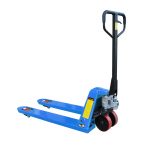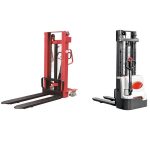



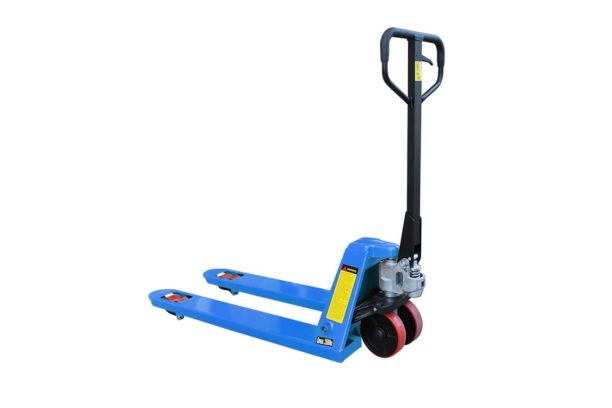
A manual pallet truck, also known as a hand pallet truck or hand pallet jack, is one of the most commonly used material handling tools in warehouses, workshops, retail stores, logistics centers, and factories. It is simple, reliable, easy to operate, and cost-effective for moving palletized goods over short distances.
Although a manual pallet truck looks simple, choosing the right model is still important. The wrong capacity, fork size, wheel material, or hydraulic system may reduce working efficiency, damage floors, or shorten the service life of the equipment.
This buying guide explains the key factors you should consider before purchasing a manual pallet truck.
1. Choose the Right Load Capacity
Load capacity is the first and most important factor when selecting a hand pallet truck. Most standard manual pallet trucks are designed for loads between 2000kg and 3000kg, depending on the model.
For general warehouse and retail use, a 2500kg manual pallet truck is often suitable. It can handle most standard palletized goods, cartons, and packaged materials. For heavier industrial applications, a 3000kg manual pallet truck provides more strength and capacity margin.
It is important not to overload the pallet truck. Overloading can damage the hydraulic system, wheels, forks, and frame. It can also create safety risks for the operator. Always choose a pallet truck with a rated capacity higher than your typical load weight.
2. Match Fork Size to Your Pallets
Fork size directly affects whether the pallet truck can enter and support your pallets correctly. The most common fork lengths are around 1150mm and 1220mm, but the right choice depends on the pallet type used in your warehouse.
Before buying, check the length, width, and entry direction of your pallets. If the forks are too short, the load may not be supported properly. If the forks are too long, the truck may be difficult to operate in narrow spaces.
A suitable fork length helps improve load stability and makes handling safer. For standard pallets, 1150mm and 1220mm fork lengths are commonly used options.
You should also check the overall fork width and lowered fork height. Lower fork height is useful when handling low-clearance pallets, while standard fork height is suitable for most general applications.
3. Select the Right Wheel Material
Wheel material has a big impact on performance, noise level, floor protection, and pushing effort. Common wheel options for manual pallet trucks include nylon, polyurethane, and rubber.
Nylon Wheels
Nylon wheels are strong, durable, and suitable for hard, smooth floors. They are a good choice for heavy loads and industrial environments. Nylon wheels usually have low rolling resistance, making the pallet truck easier to move on clean concrete floors.
However, nylon wheels can be noisier than other materials and may not be the best option for delicate floors.
Polyurethane Wheels
Polyurethane wheels are a popular all-around option. They provide a good balance between durability, quiet operation, and floor protection. They are suitable for warehouses, supermarkets, workshops, and logistics centers.
PU wheels are often recommended when you need smooth operation and want to reduce floor damage.
Rubber Wheels
Rubber wheels offer quiet movement and good grip. They are suitable for environments where noise reduction is important. However, rubber wheels may have higher rolling resistance and may not be ideal for very heavy loads or rough industrial use.
Choosing the right wheels can make the pallet truck easier to operate and help protect your working environment.
4. Check the Hydraulic System
The hydraulic system is the core of a manual pallet truck. It controls lifting and lowering, so it must be reliable, smooth, and easy to maintain.
A good hydraulic pump should lift the load efficiently and lower it smoothly. It should also be well-sealed to reduce the risk of oil leakage. A fully sealed hydraulic system can help improve durability and reduce maintenance requirements.
When comparing manual pallet trucks, pay attention to the pump design, sealing quality, overload protection, and ease of maintenance. A reliable hydraulic unit can greatly extend the service life of the truck.
5. Consider Frame Strength and Durability
The frame and forks must be strong enough to handle daily warehouse use. High-strength steel construction is important, especially when the truck is used frequently or carries heavy loads.
Look for reinforced forks, stable welding, strong chassis design, and durable surface treatment. A robust frame helps the pallet truck resist bending, wear, and impact during daily operation.
For busy warehouses, durability is not only about strength. It also helps reduce downtime and replacement cost.
6. Pay Attention to Handle Design and Operation
A manual pallet truck should be easy and comfortable to use. Most models come with a three-position control handle: lift, neutral, and lower. This allows the operator to raise, move, and lower the load with simple hand control.
An ergonomic handle improves comfort and reduces strain during repeated operation. Smooth steering also makes the truck easier to move in narrow aisles and loading areas.
Before purchasing, consider whether the handle is comfortable, whether the control lever is easy to use, and whether the truck turns smoothly under load.
7. Safety Tips for Using a Manual Pallet Truck
Even though manual pallet trucks are simple machines, safe operation is still very important.
Operators should always check the truck before use. Look for damaged wheels, oil leakage, bent forks, loose parts, or abnormal lifting performance. The load should be evenly distributed on the forks, and the operator should avoid sudden turns or fast movement with heavy loads.
Never exceed the rated capacity of the pallet truck. When moving loads on slopes or uneven floors, extra care is required. Good operating habits help protect both workers and goods.
8. Manual Pallet Truck vs Electric Pallet Truck
A manual pallet truck is ideal for short-distance and low-frequency pallet movement. It is affordable, easy to maintain, and does not require charging.
However, if your warehouse handles pallets frequently, moves loads over long distances, or wants to reduce operator fatigue, an electric pallet truck may be a better option. Many businesses use both types: manual pallet trucks for simple short movements and electric pallet trucks for heavier or more frequent handling tasks.
9. Recommended Solution: AC Series Hand Hydraulic Pallet Truck
For companies looking for a strong, reliable, and easy-to-use manual pallet truck, the AC Series Hand Hydraulic Pallet Truck is a practical choice.
The AC Series offers different capacity and fork length options, including 2500kg and 3000kg models. It is designed for daily pallet handling in warehouses, workshops, logistics centers, and retail environments.
With a strong steel frame, reliable hydraulic system, three-function handle, and optional wheel materials such as nylon, polyurethane, and rubber, the AC Series can meet different working conditions and floor requirements.
Whether you need a standard warehouse pallet truck or a heavy-duty manual pallet truck for industrial use, the AC Series provides a durable and cost-effective solution.
Conclusion
Choosing the right manual pallet truck requires more than simply comparing prices. You should consider load capacity, fork size, wheel material, hydraulic quality, frame strength, and working environment.
A well-selected hand pallet truck can improve handling efficiency, reduce operator effort, and provide long service life. For businesses that need a reliable and economical solution for short-distance pallet movement, the AC Series Hand Hydraulic Pallet Truck is a dependable choice.
Related Products
 2500kg vs 3000kg Manual Pallet Truck: A Practical Comparison
- How to Choose the Right Manual Stacker
- What to Consider When Buying a Hand Hydraulic Pallet Truck
- How Buyers Can Choose the Right Forklift Fork Extensions
- Rough Terrain Pallet Truck vs Standard Hand Pallet Truck: Which One Do You Need?
- ALT Series Buying Guide: Key Parameters to Confirm Before Purchasing a Lift and Tilt Table
- HS Series Manual Stacker Pallet Truck
- Stop Bending Over to Handle Pallet Loads A Smarter Way to Work at Waist Height
- Market Insights and Selection Guide for Hand Pallet Trucks, Small Capacity Hand Lifters
- HS Manual Stacker vs QES Electric Stacker: Which Pallet Stacker Is Right for Your Warehouse?