


Introduction
Choosing the right stationary lift table can dramatically improve workflow efficiency, safety, and ergonomics in any warehouse or workshop. This guide compares two of the most popular options—pit-mounted lift tables and surface-mounted lift tables—so you can decide which installation style best fits your operation. Throughout this article you’ll see the phrase “stationary lift table” frequently to reinforce the main keyword for search engines.
What Is a Stationary Lift Table?
A stationary lift table is a fixed-position hydraulic platform designed to elevate heavy loads to an ergonomic working height. Depending on your facility layout, a stationary lift table can be either pit-mounted (recessed into the floor) or surface-mounted (installed directly on the floor surface).
Pit-Mounted Lift Tables
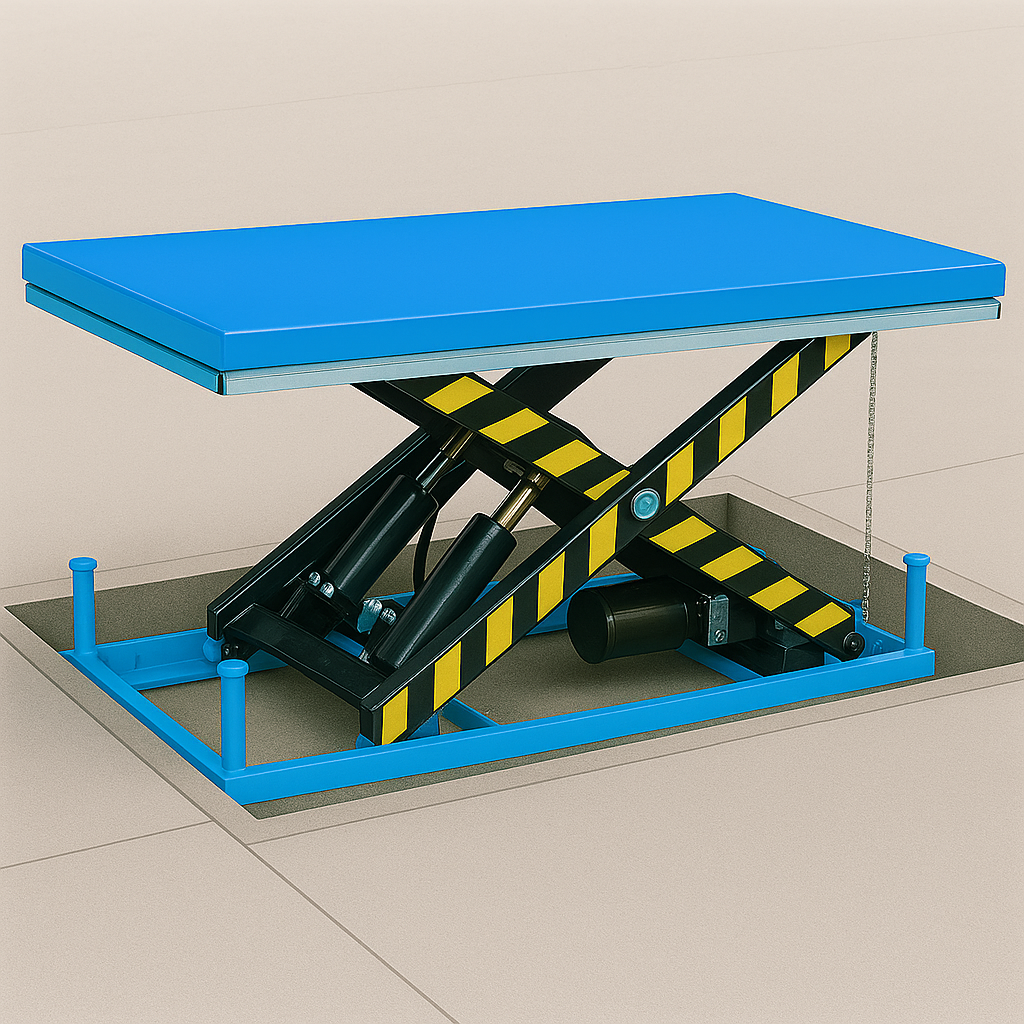
A pit-mounted lift table—sometimes called an in-pit lift table—rests flush with the floor when fully lowered. This seamless integration makes the workspace safer and more efficient because forklifts, pallet jacks, and foot traffic can move across the platform without obstruction.
Advantages of Pit-Mounted Lift Tables
- Seamless floor integration eliminates tripping hazards and ramps.
- Fast, direct loading and unloading from truck beds or pallets.
- Superior ergonomics reduce manual handling and labor costs.
- Ideal for heavy-duty, high‑frequency lifting cycles.
Disadvantages of Pit-Mounted Lift Tables
- Requires excavation and higher upfront civil engineering costs.
- Permanently fixed; relocating the equipment later is difficult.
- Longer lead time before the lift table is operational.
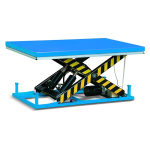
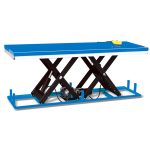
Recommended model: HW Series Stationary Lift Table—perfect for facilities that demand high capacity and flush‑floor access.
Surface-Mounted Lift Tables
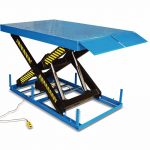
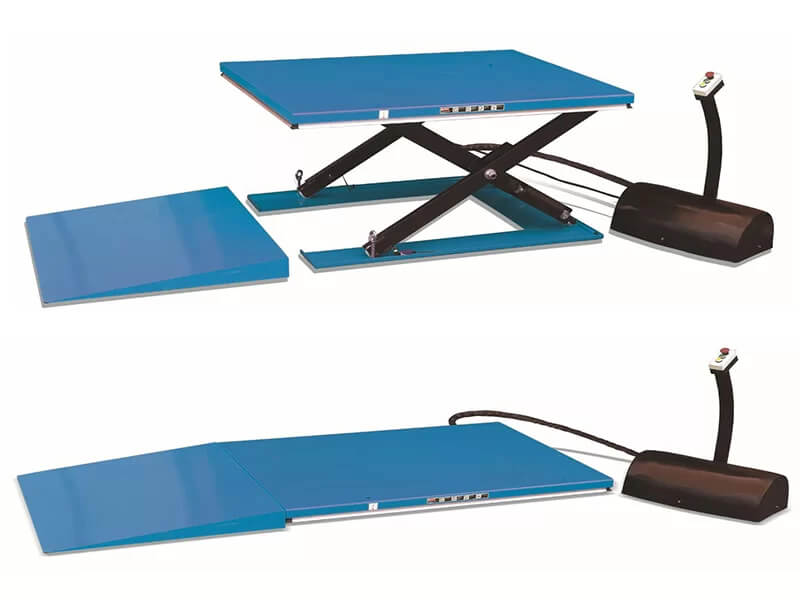
A surface-mounted lift table installs on the existing concrete floor, eliminating the need for excavation. Because the frame sits above floor level, you may need approach ramps, but you gain installation speed and flexibility.
Advantages of Surface-Mounted Lift Tables
- Minimal installation cost—no digging or concrete work required.
- Easy to relocate when workflows change.
- Simpler maintenance with all components accessible above the floor.
- Rapid deployment—ideal for operations that need a quick lift solution.
Disadvantages of Surface-Mounted Lift Tables
- Consumes floor space and can obstruct material flow.
- May require ramps for pallet jacks or forklifts.
- Less seamless for extremely heavy-duty, high‑volume operations.
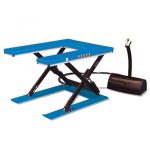
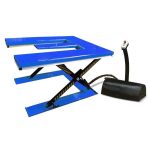
Recommended model: HY Series Low Profile Electric Lift Table—a versatile choice when you need speed, mobility, and cost‑effectiveness.
Decision Guide: Pit vs Surface Mount
Use the table below as a quick reference when choosing between a pit-mounted lift table and a surface-mounted lift table.
| Situation / Need | Best Choice | Why |
| Frequent truck loading/unloading with no loading dock | Pit‑Mounted | Flush platform speeds pallet transfer and keeps floor clear |
| Tight budget or need fast installation | Surface‑Mounted | No excavation; quick bolt‑down setup |
| Heavy‑duty, high‑frequency lifts | Pit‑Mounted | Stable, ergonomic, integrated into traffic flow |
| Changing layouts or temporary workstations | Surface‑Mounted | Relocate easily as workflows evolve |
Additional Considerations Before You Decide
- For pit installations, ensure proper drainage, toe‑guarding, and concrete reinforcement.
- Verify that the floor slab supports the dynamic loads of the stationary lift table.
- Plan for ramps or loading lips on surface-mounted installations if pallet trucks require drive‑on access.
- Schedule preventative maintenance—pit-mounted models are durable, but surface-mounted models offer easier component access.
Conclusion
There is no single “best” stationary lift table for every facility. If you prioritize heavy‑duty performance and a clutter‑free floor, select a pit‑mounted lift table like the HW Series. If you need a flexible, budget‑friendly solution that delivers ergonomic lifting without construction work, opt for a surface‑mounted lift table such as the HY Series. Either way, a properly chosen stationary lift table will boost productivity, safety, and worker satisfaction.
Related Products
 Custom Stationary Lift Table: Key Factors You Must Consider Before Ordering
- When Do You Need a U-Shape Low Profile Stationary Lift Table?
- U-Shape vs. E-Shape Low Profile Lift Tables: Which Is Better for Pallet Truck Loading?
- Rotate, Lift, and Work Smarter: A Deep Dive into the Powerful Features of the i-Lift Rotating Lift Table
- Why Counter-Balanced Floor Cranes Outperform Traditional Mobile Workshop Cranes
- Does a 300kg Application Really Need a 1000kg Rotating Lift Table?
- HY2500 Loading table&Dock lift table
- Airbag vs. Spring vs. Electric Rotating Lift Tables: Which Self-Leveling Solution Is Right for Your Material Handling Needs?
- How To Maintain Your Stationary Lift Table
- HW2000D large platform lift table